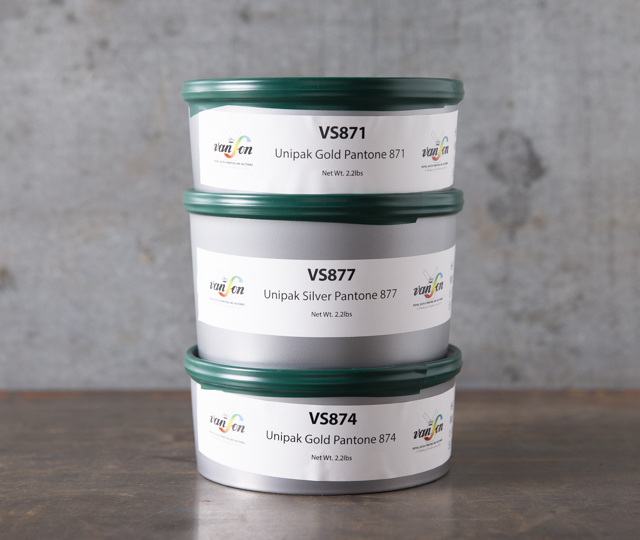
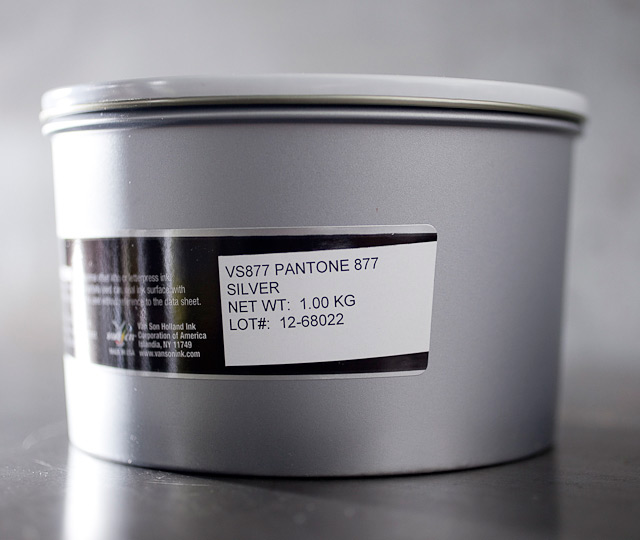
These are the three metallic bases which will allow you to mix metallic pantone colors: Gold PMS 871 (a yellower gold); Gold PMS 874 (a redder gold); and Silver PMS 877 (available in 2.2 lb cans, oil-based only).
Can you mix an acrylic ink with an oil-based or rubber-based ink?
It is best to mix only inks from the same family – oil base with oil base, rubber base with rubber, acrylic with acrylic.
What are the most essential basic ink colors for me to have in my shop?
Try our letterpress ink basic starter kit, which includes Printing Black; Flame Red (032); Reflex Blue; Yellow; Transparent White (mixing white); and Opaque White (printing white). If you’re ready for more, you may want to try the remaining Pantone base colors.
How do I firm up my thin ink?
Add magnesium carbonate liberally to your ink. Magnesium carbonate is available from Daniel Smith Art Supply.
How do I print light ink on dark paper?
With letterpress, we tend to print dark ink on light paper, because that is letterpress printing’s strength! Light ink on dark paper is really best suited for engraving. That said, if you really want light ink on dark paper, just be prepared for paper show through. Letterpress uses transparent inks. Even with opaque white, printing light ink on dark paper will be like using a thin coat of white paint on a brown wall: you’ll see the brown color through the paint. If using a pure white ink or metallic ink, you can run a piece through the press twice to create a more dense color.
Why shouldn’t I let oil-based ink dry on my rollers
Oil based inks will dry within a few hours if left unattended on press; dried oil-based inks can take a long time to clean and can even cause rollers to be permanently damaged.
Once I’m done printing, how do I clean the ink off my rollers/plates?
To clean ink off your press, we recommend California Wash used with rags or disposable shop towels. This press wash cleans up acrylic, oil based and rubber based inks well, is a low VOC solvent, and has a mild somewhat citrus odor.